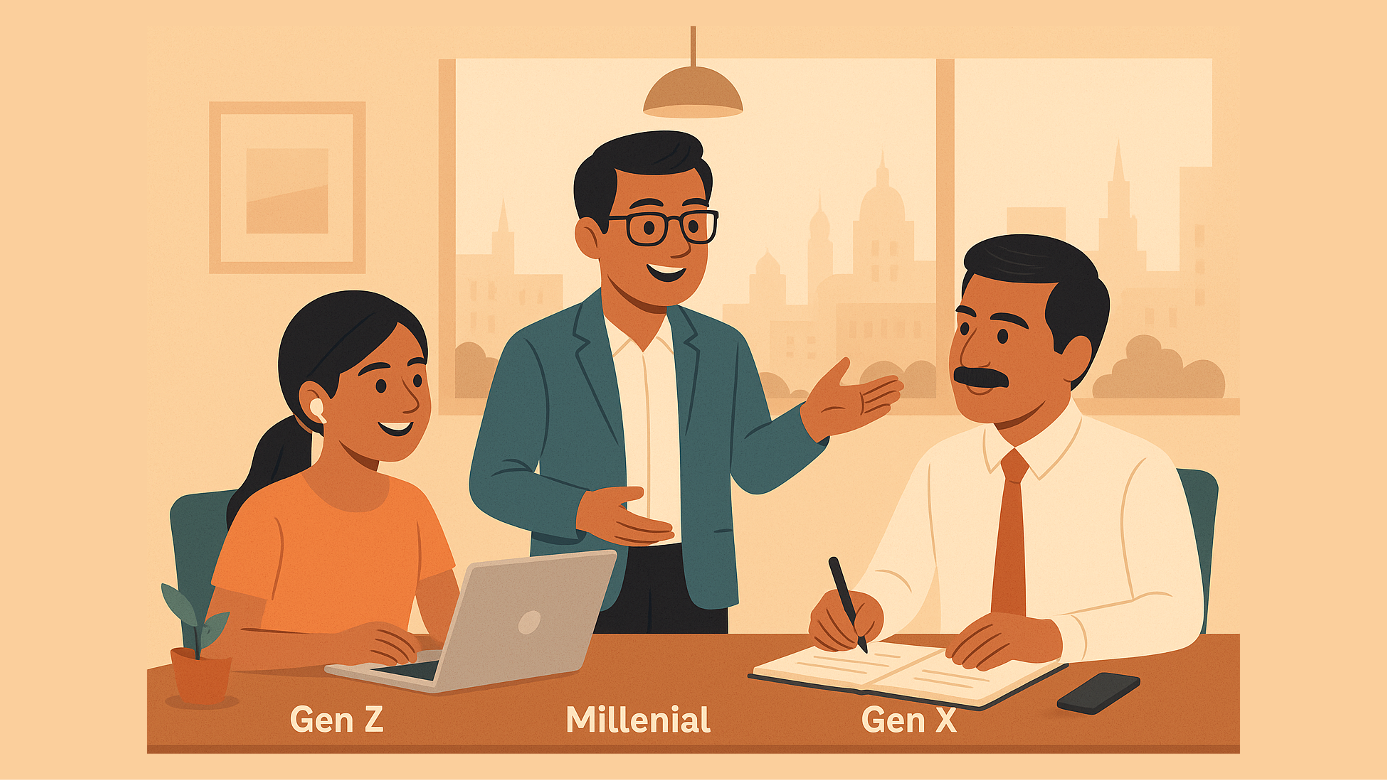
India’s workforce is undergoing a fascinating transition. Walk into any workplace today, and you’ll find: Millennials managing teams and driving business continuity.
Gen Z entering in large numbers, bringing digital-first thinking and entrepreneurial energy,
And, not too far away, Gen Alpha preparing in classrooms — the workforce of 2030.
With 65% of India’s population under the age of 35, the country has a unique opportunity: to transform this youthful energy into a strategic advantage for businesses. But this also requires leaders to rethink workforce planning, cultural alignment, and leadership development interventions across levels.
Who Are They in the Indian Context?
🌏 Millennials (born ~1981–1996):
They form the backbone of middle management and specialist roles. Pragmatic about growth, balancing stability with meaningful work, and open to blended learning.
📱 Gen Z (born ~1997–2012):
Already a quarter of India’s workforce by 2025, many are balancing work and study. They crave flexibility, rapid feedback, and purposeful careers. Digital-first is second nature.
🕹️ Gen Alpha (born 2010 onwards):
Still in classrooms, but shaping the future. They are the true digital natives — growing up with AI, AR/VR, and gamified learning. Their entry into the workforce after 2030 will redefine work entirely.
Why It Matters for Workforce Planning
- Volume & Urgency – Gen Z is entering at scale. Organizations that build structured early-career pathways will win long-term loyalty.
- Employment Friction – Youth unemployment and skill gaps mean sheer numbers won’t solve workforce shortages. Apprenticeships and applied skilling are essential.
- Learning Appetite – Surveys show Millennials and Gen Z in India display extremely high engagement in on-the-job learning. The challenge isn’t motivation; it’s structuring learning that sticks.
Culture Alignment: The Glue
- Stability + Speed: Millennials want stable growth; Gen Z needs quick feedback. Build systems that balance both.
- Hybrid Norms: Define clear rituals for collaboration — a blend of async documentation and deep work windows.
- Language & Lingo: Normalize reverse-mentoring and cross-gen “translation” rituals so slang, shortcuts, or jargon don’t become barriers.
- Purpose that’s Real: Tie tasks to measurable outcomes and impact. Gen Z especially expects purpose to be lived, not laminated.
Leadership Development Interventions - Micro-onboarding journeys (30/60/90 days).
- Mentor pods pairing one Millennial and one Gen Z coach.
- Work-study apprenticeship programs aligned with college calendars.
Mid-Level Managers (3 – 10 years) - Intergenerational leadership sprints with cross-gen cohorts.
- Shadowing + reverse shadowing (tech fluency ↔ people leadership).
- Hybrid leadership coaching for managing distributed teams.
Senior Leaders (10+ years) - Strategic immersion labs with startups and youth panels.
- Board-level metrics that track early-career pipeline health.
- Succession circuits rotating leaders through innovation-focused roles.
Building Cross-Generational Learning - Reverse Mentoring: Formalize with outcomes and deliverables.
- Learning Marketplaces: Employees design short masterclasses; Gen Z brings digital hacks, Millennials contribute institutional knowledge.
- Shared Sprints: Mixed-age teams solve real business problems in 72 hours.
What Leaders Should Measure - Ramp time to productivity (by generation).
- Cross-gen engagement index (are employees feeling respected and understood?).
- Internal mobility across levels.
- Learning ROI from applied micro credentials.
- Pipeline readiness for Gen Alpha (partnerships with schools, early internships).
Final Thought
The Indian workforce is not just “young” — it is layered across three powerful generations. Strategic workforce planning today means designing for a mixture: programs where Millennials, Gen Z, and (soon) Gen Alpha can learn from one another, adapt to each other’s habits, and align on purpose.
Leaders who can create this cross-generational bridge won’t just manage talent — they will future-proof their organizations for the decade ahead.
Over to you: How is your organization preparing its workforce strategy to harness Millennials, Gen Z, and Gen Alpha together?